<?xml version="1.0" encoding="UTF-8"?>
<rss version="2.0"
	xmlns:content="http://purl.org/rss/1.0/modules/content/"
	xmlns:wfw="http://wellformedweb.org/CommentAPI/"
	xmlns:dc="http://purl.org/dc/elements/1.1/"
	xmlns:atom="http://www.w3.org/2005/Atom"
	xmlns:sy="http://purl.org/rss/1.0/modules/syndication/"
	xmlns:slash="http://purl.org/rss/1.0/modules/slash/"
	>

<channel>
	<title>The End of Linearity</title>
	<atom:link href="http://theendoflinearity.com/?feed=rss2" rel="self" type="application/rss+xml" />
	<link>http://theendoflinearity.com</link>
	<description>In a Miscellaneous World, There is no Beginning or End</description>
	<lastBuildDate>Tue, 21 Aug 2012 14:12:48 +0000</lastBuildDate>
	<language>en-US</language>
	<sy:updatePeriod>hourly</sy:updatePeriod>
	<sy:updateFrequency>1</sy:updateFrequency>
	<generator>http://wordpress.org/?v=3.5</generator>
		<item>
		<title>Building the Digital Fabric at the Heart of the Knowledge Navigator</title>
		<link>http://theendoflinearity.com/?p=193</link>
		<comments>http://theendoflinearity.com/?p=193#comments</comments>
		<pubDate>Sun, 19 Aug 2012 19:06:29 +0000</pubDate>
		<dc:creator>The End of Linearity</dc:creator>
				<category><![CDATA[Internet]]></category>

		<guid isPermaLink="false">http://theendoflinearity.com/?p=193</guid>
		<description><![CDATA[Gary Thompson, is not only the curator of The End of Linearity, but the co-founder of CLOUD, Inc. CLOUD will be the manifestation of much of the thinking embodied by the End of Linearity. Those posts that relate more to &#8230; <a href="http://theendoflinearity.com/?p=193">Continue reading <span class="meta-nav">&#8594;</span></a>]]></description>
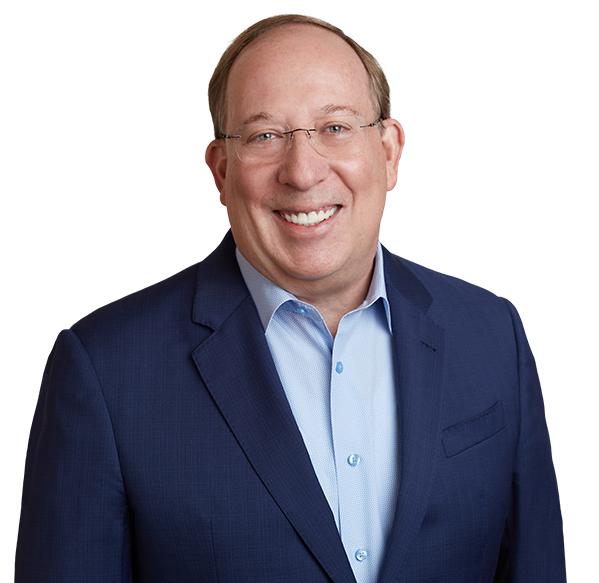
				<content:encoded><![CDATA[<p>Gary Thompson, is not only the curator of The End of Linearity, but the co-founder of CLOUD, Inc. CLOUD will be the manifestation of much of the thinking embodied by the End of Linearity. Those posts that relate more to Gary&#8217;s thinking than just CLOUD&#8217;s thinking are shared here.</p>
<p><strong>The following discussion has been posted in a number of the LinkedIn groups (Gary was at Apple from 1987-97, and 2003-2006):</strong></p>
<p>As Apple builds out <a href="http://apple.com/icloud ">iCloud</a>, we at <a href="http://www.cloudinc.org">CLOUD</a> are building out something equally exciting: the next Internet. A few months back, I posted a discussion here asking how Knowledge Navigator connected the Amazon and the Sahara data sets.</p>
<object type="application/x-shockwave-flash" width="440" height="389" data="http://getembedplus.com/embedplus.swf" id="ep7243"><param value="http://getembedplus.com/embedplus.swf" name="movie" /><param value="high" name="quality" /><param value="transparent" name="wmode" /><param value="always" name="allowscriptaccess" /><param value="true" name="allowFullScreen" /><param name="flashvars" value="ytid=8mLqJNDWx-8&width=440&height=357&start=&stop=&rs=w&hd=0&autoplay=0&react=1&chapters=&notes=" /><iframe class="cantembedplus" title="YouTube video player" width="440" height="357" src="http://www.youtube.com/embed/8mLqJNDWx-8?fs=1" frameborder="0" allowfullscreen></iframe></object><!--[if lte IE 6]> <style type="text/css">.cantembedplus{display:none;}</style><![endif]-->
<p>I loved Knowledge Navigator&#8217;s vision and remember showing this video during customer events frequently when I was in the sales office in Chicago for Apple in the late 1980s to early 1990s. Siri, the iPad, FaceTime&#8230; so much of Knowledge Navigator has come true. With all these advances, there is still an underlying need for something like HTML but for privacy, security, identity and data to create the digital fabric underlying Knowledge Navigator.</p>
<p>If you visit <a href="http://www.cloudcircles.org">CLOUDCircles</a>, my TEDxAustin talk, &#8220;<a href="http://youtu.be/afMjZgvtsp8">Reweaving the Fabric of the Internet to Transform Humanity,</a>&#8221; is available in the videos. I know my ability to Think Different is driven by my over a decade at Apple.</p>
<p>If you wish to support this vision and the work of a fellow Apple alum to make it happen, CLOUDCircles is also our crowdfunding mechanism. The Apple CLOUDCircle can be found by clicking on People, because at the end of the day, people are what made and still make Apple Apple.</p>
]]></content:encoded>
			<wfw:commentRss>http://theendoflinearity.com/?feed=rss2&#038;p=193</wfw:commentRss>
		<slash:comments>0</slash:comments>
		</item>
		<item>
		<title>The Texas Textbook Wars</title>
		<link>http://theendoflinearity.com/?p=58</link>
		<comments>http://theendoflinearity.com/?p=58#comments</comments>
		<pubDate>Thu, 11 Mar 2010 01:35:44 +0000</pubDate>
		<dc:creator>The End of Linearity</dc:creator>
				<category><![CDATA[Education]]></category>
		<category><![CDATA[eLearning]]></category>
		<category><![CDATA[Metadata]]></category>
		<category><![CDATA[Textbooks]]></category>

		<guid isPermaLink="false">http://theendoflinearity.com/?p=58</guid>
		<description><![CDATA[There is an interesting discussion underway on the &#8220;Texas Textbook Wars&#8221; over at FoxNews.com. Of course, when one posts a comment in these sorts of online venues, one always runs the risk of the emotional response to a substantive post. &#8230; <a href="http://theendoflinearity.com/?p=58">Continue reading <span class="meta-nav">&#8594;</span></a>]]></description>
				<content:encoded><![CDATA[<p>There is an interesting discussion underway on the &#8220;Texas Textbook Wars&#8221; over at <a href="http://liveshots.blogs.foxnews.com/2010/03/10/go-straight-to-source-in-textbook-fight/comment-page-4/#comment-67717">FoxNews.com.</a> Of course, when one posts a comment in these sorts of online venues, one always runs the risk of the emotional response to a substantive post.  However, there is also the probing question, though, that deserves more attention, which is why I am making a more thorough answer to one of those questions here at theendoflinearity.</p>
<p>My original post went as follows:</p>
<blockquote><p>Of course, the really interesting part of this debate is the topics that are just under the surface. In a world of iPads, Kindles and digital content, we are still talking about books! In the era of Encyclopedia Britannica, &#8220;content&#8221; was static because it was printed on paper, and it was not cost effective to print more than every 7 or 8 years. The content was never static; the delivery and production mechanisms were.</p>
<p>In a world of Wikipedia, content can now be more dynamic, because the costs to deliver it are dramatically reduced. Think about it. If there is a mistake in Britannica, it will take years to have it corrected. If there is a mistake at Wikipedia, it can be fixed in seconds. Even better, debates like this one can have all of the arguments available to students, not just the conclusion. Facts like 1+1=2 are easy to validate; other &#8220;facts&#8221; are bit more challenging to nail down firmly.</p>
<p>Please check out these two posts for much longer expositions on the real battles we should be fighting over textbooks:<a href="http://theendoflinearity.com/?p=8"> Learning to Read &#8211; Books or Words?</a> <a href="http://theendoflinearity.com/?p=13">Beyond Schools: A Foundation for Education in the 21st Century</a>.</p></blockquote>
<p>The more useful question (the other one told me I had a lot to learn) went like this:</p>
<blockquote><p>i agree with you but this also means that what they dont want us to see can be rewritten just as easy</p></blockquote>
<p>As I commented in the thread at FoxNews, <span id="more-58"></span>I run the risk of making an assumption about who &#8220;they&#8221; is, however, I will define they for my purposes as either author, publisher or state board of education and answer the question posed from these three perspectives.</p>
<p>Let&#8217;s start with the authors.  From their perspective, the publishing world is not that far off from where musicians were in 2003 before the introduction of iTunes.  Publishers, in many ways, are very similar to the labels in the music space.  In an analog world, these labels were vital to distribution.  In a digital world, any author or musician can reach their audiences directly.  Of course, this doesn&#8217;t mean that publishers need to leave the scene.  Music labels that have figured out the digital world are making money; those that haven&#8217;t are not.  So, the bottomline is this.  There is incredible talent writing for textbooks, and there are teachers and others that have written amazing content, too, as well as curriculum that could reach the students.  No more publishers or SBOEs standing in the way of the content flow.  All that is written becomes available.</p>
<p>From the publishers perspective, I suspect many would love to see a business model evolve that would let more of their content be used more often and more effectively.  I also suspect they realize that their margins would grow exponentially if they could free themselves of the dead tree format known as books.  I also suspect that if publishers could publish their content digitally, they would also be able to &#8220;tag&#8221; it with both state standards codes, as well as with many other rich bits of metadata.</p>
<p>Why would this matter?  It matters because once there is rich metadata, then one can stop trying to figure which ONE book will satisfy the needs of every student, every district and every state.  You can have as many books as you need.  This leads to the ultimate in local control. Local school districts and individual families can set up their own unique filters.  The student still meets the state standards and assessment requirements, but they do it with the content that meets their personal ethical, religious or other standards. One size does not need to fit all.  Such an environment would move our moral and ethical debates back into the public square and out of the classroom.</p>
<p>And perhaps, get us closer to the individual rights our founders were trying to protect.  In order to believe what I want to believe, I need to let you believe in your unique beliefs, too.  More on individual rights <a href="http://theendoflinearity.com/?p=23">here</a>.</p>
<p>The most powerful effect of liberating content, authors and distributors is to suddenly create a whole new type of state board of education.  Just like the crowd-sourcing we&#8217;ve seen in other venues, there is no reason in the world to not crowd-source content.  Rather than less than 20 board members, elected by a small turnout of registered voters that represents an even smaller fraction of the total population, we can enable every learner and every citizen to have a vote.  Successful content that is used by many and is effective will be the content that wins out.  And, this ultimately is where the battle must be won, in the hearts and minds of our students, students that are both literate and prepared for a truly civil society.</p>
]]></content:encoded>
			<wfw:commentRss>http://theendoflinearity.com/?feed=rss2&#038;p=58</wfw:commentRss>
		<slash:comments>1</slash:comments>
		</item>
		<item>
		<title>Reweaving the Fabric of the Internet</title>
		<link>http://theendoflinearity.com/?p=31</link>
		<comments>http://theendoflinearity.com/?p=31#comments</comments>
		<pubDate>Wed, 10 Feb 2010 19:32:16 +0000</pubDate>
		<dc:creator>The End of Linearity</dc:creator>
				<category><![CDATA[Internet]]></category>
		<category><![CDATA[Bob Kahn]]></category>
		<category><![CDATA[Vint Cerf]]></category>
		<category><![CDATA[Weaving]]></category>

		<guid isPermaLink="false">http://theendoflinearity.com/?p=31</guid>
		<description><![CDATA[Weaving is an art practiced since ancient times.  Fragments of fabric dating to 5000 B.C. mean  this art pre-dates the fabrication of papyrus in 3000 B.C. in Egypt.  The art of weaving, its cultural and economic ecosystem, and the tremendous &#8230; <a href="http://theendoflinearity.com/?p=31">Continue reading <span class="meta-nav">&#8594;</span></a>]]></description>
				<content:encoded><![CDATA[<p>Weaving is an art practiced since ancient times.  Fragments of fabric dating to 5000 B.C. mean  this art pre-dates the fabrication of papyrus in 3000 B.C. in Egypt.  The art of weaving, its cultural and economic ecosystem, and the tremendous volume of innovation over the centuries that stems from weaving  make for an apt and powerful analogy to understand the potential of the next phase of Internet and economic development.</p>
<p>In weaving, threads and yarns are essential. Threads are hooked to the physical <a href="http://en.wikipedia.org/wiki/Loom">loom</a>, converting them into <a href="http://en.wikipedia.org/wiki/Warp_%28weaving%29">warp threads</a>.  Each warp thread passes through a <a href="http://en.wikipedia.org/wiki/Heddle">heddle</a>, which lifts and lowers the warp threads, creating a <a href="http://en.wikipedia.org/wiki/Shed_%28weaving%29">shed</a>. The shed allows the <a href="http://en.wikipedia.org/wiki/Weft">weft thread</a> to pass back and forth through the warp threads on a <a href="http://en.wikipedia.org/wiki/Shuttle_%28weaving%29">shuttle</a> to create fabric.</p>
<p>Over time, looms become faster and mechanically driven and their complexity increased.  <span id="more-31"></span>The <a href="http://en.wikipedia.org/wiki/Dobby_loom">Dobby loom</a>, for example, created up to 256 sheds, which allowed the weft passing through them to create more complex fabrics.  One interesting advance in Dobby looms was the new <a href="http://en.wikipedia.org/wiki/Jacquard_loom">Jacquard head</a>, which mounted atop a Dobby loom and used punch cards (later used for computer programming) to direct the various sequences and operations. Every loom had a weaver that would manage the creation of the fabric and roll it up on a take up device as the many operations were repeated.  From an ecosystem perspective, the fabric created by these weavers became either a finished product or an input to produce still more complex textiles.</p>
<p>What does the 7,000 year-old weaving industry have to do with the Internet? A properly architected Internet helps us understand the potential of a new weaving ecosystem – a system in which digital information, not physical threads, are woven in new, complex, and more productive ways, liberating us from physical threads and looms. and facilitating an entirely  new social and economic fabric.</p>
<p>We, as individuals, are the threads and the yarn of an evolving Internet. In the virtual world, however, these threads can be woven into an infinite number of fabrics.  For that matter, a warp thread in one fabric could be a weft thread in another fabric.  And multiple weavers could mesh their respective fabrics into new designs, creating new fabrics while protecting particular threads.</p>
<p>Looms, liberated from their physical limitations, allow us to imagine some wild new concepts. First, a multidimensional loom can produce fabric in multiple directions and dimensions. The take up of our new Internet looms can exist in as many places as there are weavers.  Similarly, the new looms are also not limited by having heddles and heads that only exist “above” the fabric-making operation.  In the virtual space of the Internet, there is no longer an above or a below, so the heddles can be multidimensional, allowing for the 21st century Jacquard heads to drive new fabrics and designs from any direction, or dimension.</p>
<p>From health to education to finance and beyond, the ability to bring together people, concepts, and ideas (threads) in new ways is an invigorating journey.  Our “weavers” of the future can design beautiful new fabrics from cures to cancer to dynamic global learning communities to rapidly evolving financial models.  When thread and fabric are unleashed, when weaver and woven can dynamically change places, when loom and head are released from the bonds of the physical, the Internet can become remarkably more useful. By applying an end of linearity to how we think about the Internet, we can begin to understand the potential beauty of what Vint Cerf and Bob Kahn created.  It is a connector of people, not of Web pages, and it is at the heart of a new rewoven future.</p>
]]></content:encoded>
			<wfw:commentRss>http://theendoflinearity.com/?feed=rss2&#038;p=31</wfw:commentRss>
		<slash:comments>3</slash:comments>
		</item>
		<item>
		<title>Set the Default to Open</title>
		<link>http://theendoflinearity.com/?p=23</link>
		<comments>http://theendoflinearity.com/?p=23#comments</comments>
		<pubDate>Fri, 22 Jan 2010 15:54:34 +0000</pubDate>
		<dc:creator>The End of Linearity</dc:creator>
				<category><![CDATA[Internet]]></category>

		<guid isPermaLink="false">http://theendoflinearity.com/?p=23</guid>
		<description><![CDATA[Nowhere is the end of linearity more important than our individual rights, and Set the Default to Open takes a new look at this issue from both a legal and technology perspective. From the introduction to the article in the &#8230; <a href="http://theendoflinearity.com/?p=23">Continue reading <span class="meta-nav">&#8594;</span></a>]]></description>
				<content:encoded><![CDATA[<p style="text-align: left;">Nowhere is the end of linearity more important than our individual rights, and <a href="http://theendoflinearity.com/wp-content/uploads/2010/01/Set-the-Default-to-Open-Thompson-Wilkinson.pdf">Set the Default to Open</a> takes a new look at this issue from both a legal and technology perspective.</p>
<p style="text-align: left;">From the introduction to the article in the forthcoming Texas Review of Law and Politics, Volume 14, Issue 1:</p>
<p style="font: normal normal normal 12px/normal Arial; text-align: left; margin: 0px;">Rugged individualism and religious and economic freedom are among the most important factors that have contributed to the growth of U.S. global power and prestige and the welfare of its citizens since the founding of the original colonies. The trajectory of freedom has not always been smooth; however, the United States has remained a powerful example of the benefits and resilience of constitutional democracy. It has weathered a civil war and two world wars, grown from the shores of the Atlantic to the northern reaches of the Pacific, become a global economic and technological powerhouse, and even treated the great wound of slavery.</p>
<p style="font: normal normal normal 12px/normal Arial; min-height: 14px; text-align: left; margin: 0px;">
<p style="font: normal normal normal 12px/normal Arial; text-align: left; margin: 0px;">In the midst of this success the underlying tension in constitutional democracy—the force behind U.S. power and prestige—has the capacity to muddle the national vision. Tension between individual rights and the state is not new. It stretches from antiquity to the Renaissance to the modern world. The U.S. Constitution represents an attempt to codify the social contract between the government and its citizens in an enduring document that supports a functioning government and society.<span id="more-23"></span></p>
<p style="font: normal normal normal 12px/normal Arial; min-height: 14px; text-align: left; margin: 0px;">
<p style="font: normal normal normal 12px/normal Arial; text-align: left; margin: 0px;">During the 220 years since its ratification, we have repeatedly revisited the fundamental elements of this social contract. Since the initial Bill of Rights, we have added seventeen amendments to the Constitution, and our constitutional jurisprudence has advanced far beyond the common law we inherited from Great Britain. One case in particular, Plessy v. Ferguson, highlighted the tension between the government and the individual more than any other case in its time. Before Plessy, the Civil War Amendments sought not only to end the slavery that was countenanced in the original Constitution but also to protect the individual rights of all citizens at the State level.  Plessy eviscerated that goal with its abhorrent doctrine of “separate but equal.”  Although the Supreme Court later overturned the “separatebutequal”doctrineinBrownv.BoardofEducation,6 the tension between group rights and individual rights remained. This tension continues today due to the recent extraordinary growth in the size and power of the federal government in areas as personal as retirement, education, and health care.</p>
<p style="font: normal normal normal 12px/normal Arial; min-height: 14px; text-align: left; margin: 0px;">
<p style="font: normal normal normal 12px/normal Arial; text-align: left; margin: 0px;">The expansion of federal power has been accompanied by accelerating development and use of technology. From curing disease and increasing food quality and supply, to the space shuttle and the iPhone, technology has revolutionized how individuals live and communicate. The Internet, one of the most significant advances in technology, has the capacity to change how the social contract is executed. By enabling speedy and robust communication, it can fundamentally alter the individual’s relationship with the state. Ultimately, the Internet has the capability to perform the traditional governmental function of aggregating individual power. Thus, the Internet holds the potential to facilitate the casteless and classless society described in Justice John Marshall Harlan’s dissent in Plessy.</p>
]]></content:encoded>
			<wfw:commentRss>http://theendoflinearity.com/?feed=rss2&#038;p=23</wfw:commentRss>
		<slash:comments>0</slash:comments>
		</item>
		<item>
		<title>Learning to Read &#8211; Books or Words?</title>
		<link>http://theendoflinearity.com/?p=8</link>
		<comments>http://theendoflinearity.com/?p=8#comments</comments>
		<pubDate>Thu, 16 Apr 2009 15:45:18 +0000</pubDate>
		<dc:creator>The End of Linearity</dc:creator>
				<category><![CDATA[Education]]></category>
		<category><![CDATA[eLearning]]></category>
		<category><![CDATA[HB4294]]></category>

		<guid isPermaLink="false">http://theendoflinearity.com/?p=8</guid>
		<description><![CDATA[An interesting debate is unfolding in the Texas Legislature and with concerned citizens organizations regarding the funding of textbooks for our school children. Textbook funding is faced with a 25% cut and approval as a contingency rider, as opposed to &#8230; <a href="http://theendoflinearity.com/?p=8">Continue reading <span class="meta-nav">&#8594;</span></a>]]></description>
				<content:encoded><![CDATA[<p>An interesting debate is unfolding in the Texas Legislature and with concerned citizens organizations regarding the funding of textbooks for our school children. Textbook funding is faced with a 25% cut and approval as a contingency rider, as opposed to its traditional budgeting in the TEA baseline.</p>
<p>Books for kids&#8230; That one is always guaranteed to create a deep and emotional response. I&#8217;m just old enough to not be a GenXer but just young enough to not be a baby boomer. Regretfully, this still means that I am old&#8230; and old enough to love a good book. <span id="more-8"></span>There is something about the well-bound tome that is truly enjoyable. The fact that you can pick it up, sit in a comfy chair near a warm fire or out under a tree makes the book more than just words but an experience. However, having grown up in a world of rapidly evolving technology, I also realize that there are times when curling up with that book just doesn&#8217;t work for the information I need. You just can&#8217;t curl up with a Google search or tuck yourself away for hours unpacking a quick look at a Wikipedia entry. Of course, in both of these cases, I&#8217;m still reading, an art I learned from books, because that is all we had when I was in school&#8230; but not an art that only requires books in today&#8217;s age of the Internet.</p>
<p>As with any debate, the motivations of the participants in the debate and the use of certain words as proxies highlight the real contours of the conversation and the expected outcomes by various parties. The most interesting comment was the one that remarked, &#8220;books are required to learn how to read.&#8221; This dire prognostication actually misses the point of reading. As I&#8217;ve discovered with my three children (10, 7 and 5), &#8220;words&#8221; are necessary to learn how to read, not books. Of course, for the past couple of millenia, words have been printed on papyrus, an invention dating back to Egypt and China. But, does it really matter, if the words are printed in books? Could those words be displayed in other ways and still achieve the goals or learning how to read?</p>
<p>Beware the loose use of words. Understanding what the real debate is is critical to making good decisions. For example the use of the word &#8220;free&#8221; in the Texas Constitution regarding the use of Available School Funds for “providing free text books&#8221; for schoolchildren can mask the real issue. Unless the publishers that make up the School Division of the Association of American Publishers, that provide the Texas Curriculum website resources (texastextbooks.org), have changed their business model, books are not free. Books and any instructionally-related materials cost money. I&#8217;m a capitalist, so I consider this to be a good thing. Without a profit incentive, then the best possible creation of materials can not occur. However, if books are not free, then the next question must be asked. Is buying a book the best possible use of limited taxpayer funds to achieve the outcome we want for all Texas schoolchildren? Are there other ways to achieve the goal of reading, that focuses on words and not books?</p>
<p>That debate is the interesting debate. When you move beyond the proxy argument of &#8220;books for kids&#8221; and get to the heart of the matter, learning, then you are having the right argument.</p>
]]></content:encoded>
			<wfw:commentRss>http://theendoflinearity.com/?feed=rss2&#038;p=8</wfw:commentRss>
		<slash:comments>1</slash:comments>
		</item>
		<item>
		<title>Recession, Recovery or Great Reorienting</title>
		<link>http://theendoflinearity.com/?p=4</link>
		<comments>http://theendoflinearity.com/?p=4#comments</comments>
		<pubDate>Tue, 10 Mar 2009 15:45:03 +0000</pubDate>
		<dc:creator>The End of Linearity</dc:creator>
				<category><![CDATA[Economics]]></category>

		<guid isPermaLink="false">http://theendoflinearity.com/?p=4</guid>
		<description><![CDATA[Paul Wilkinson, former senior advisor to Chairman Cox at the SEC teases out some very interesting thoughts in his recent blog post on A Great Recovery (http://paulwilkinson.com/2009/03/08/why-not-a-great-recovery/)? As I think through Paul&#8217;s comments and the scenario in which we find &#8230; <a href="http://theendoflinearity.com/?p=4">Continue reading <span class="meta-nav">&#8594;</span></a>]]></description>
				<content:encoded><![CDATA[<p>Paul Wilkinson, former senior advisor to Chairman Cox at the SEC teases out some very interesting thoughts in his recent blog post on A Great Recovery (http://paulwilkinson.com/2009/03/08/why-not-a-great-recovery/)?</p>
<p>As I think through Paul&#8217;s comments and the scenario in which we find our economy today, I can&#8217;t help but be struck by the following thought. When our economy transitioned from an agrarian society to an industrial one, what did a citizen in the UK, the United States and so many other countries think was occurring? <span id="more-4"></span>Looked at in a rear view mirror, there were no analogies which were relevant, since they were not seeing the duplication of a past event but the beginnings of a completely new era.</p>
<p>Without a doubt, the period must have been very disconcerting, and similar to our policymakers today, an effort to use traditional policy and financial tools to stabilize the sudden changes in their fortunes must have occurred. However, I have to think that they didn&#8217;t work or at least, not for the reasons they were adopted. The transformation that was underway was bigger than monetary policy; a whole new foundation for our industrial economy was being established.</p>
<p>As 2009 unfolds, we may believe we are in the midst of simply a recession (a severe one, of course), but we are instead in the midst of a similar economic reordering to a knowledge economy. As Alvin Toeffler so aptly discussed in his book, PowerShift, published in 1990, this shift is based on a variety of factors, including the substitution of knowledge for capital. Without the transparency that Paul highlights in his blog and which we have discussed extensively together, our capital is untethered to the knowledge that must go with it. That lack of a full tie between knowledge and capital destroys trust and leads to the massive revaluation of assets that has been underway in the past year. Transparency is a critical step to tying knowledge to capital.</p>
<p>The Great Depression of the 1930s is much discussed by the media but overlooks a variety of other panics in the 1800s that may provide a better construct for understanding the current situation. The Panic of 1837 is a case in point, and I think has many similarities to our current recession. One of those similarities is that it occurred due to a loss of confidence in the financial system. We may debate Fannie Mae/Freddie Mac, derivatives trading and a myriad of other causal factors for this recession, but it does ultimately come down to confidence.</p>
<p>The question we must ask, however, is what is the answer. Is it a standard set of policy tools or something new? The current wave of massive spending as the solution presupposes capital over knowledge. I would argue that it is the latter because our Great Recovery will occur as a consequence of understanding that we are actually in the midst of a PowerShift or in my words, a Great Reorienting.</p>
]]></content:encoded>
			<wfw:commentRss>http://theendoflinearity.com/?feed=rss2&#038;p=4</wfw:commentRss>
		<slash:comments>0</slash:comments>
		</item>
		<item>
		<title>There is no There There on the Internet</title>
		<link>http://theendoflinearity.com/?p=11</link>
		<comments>http://theendoflinearity.com/?p=11#comments</comments>
		<pubDate>Tue, 24 Jun 2008 15:45:21 +0000</pubDate>
		<dc:creator>The End of Linearity</dc:creator>
				<category><![CDATA[Internet]]></category>

		<guid isPermaLink="false">http://theendoflinearity.com/?p=11</guid>
		<description><![CDATA[I am at the Personal Democracy Forum in NYC, and as the many great panels and conversations unfold, I realized that I needed to post some of my recent conversations around social networking into the public sphere. As more and &#8230; <a href="http://theendoflinearity.com/?p=11">Continue reading <span class="meta-nav">&#8594;</span></a>]]></description>
				<content:encoded><![CDATA[<p>I am at the Personal Democracy Forum in NYC, and as the many great panels and conversations unfold, I realized that I needed to post some of my recent conversations around social networking into the public sphere.</p>
<p>As more and more of us tap into destination sites like FaceBook, LinkedIn and MySpace, it is critical to understand that like email, these types of all-in-one sites are very unInternet.</p>
<p>The most critical aspect of the Internet is that there is no there there. <span id="more-11"></span>In the physical world, we have destinations and can only exist in one unique space. To be in Evanston, I must fly to O&#8217;Hare and take a cab to campus. I can not be in Austin, Texas and Evanston, IL at the same time. In the digital world, that restriction is lifted and thus I can have a presence in multiple locations and multiple communities, simultaneously, concurrently and in parallel.</p>
<p>The current challenge with the MySpace, FaceBook or LinkedIn view of the world is that I must continue to go their websites as a destination. We &#8220;go to&#8221; facebook.com or we &#8220;go to&#8221; linkedin.com or &#8220;go to&#8221; alumni.university.edu. The challenge with destinations, though, is that this concept forces us to use the digital world the same way we do the physical world. On the Internet, I can exist in multiple locales at the same time, so the idea of a &#8216;destination&#8217; disappears.</p>
<p>The challenge with LinkedIn groups or Facebook communities is that we simply substitute their destination for other ones. I don&#8217;t want a destination; I simply want to connect with those with whom I need to connect, AnyWhere.</p>
<p>One way that I like to say this is that I had social networks before FaceBook and LinkedIn, and I will have social networks long after these particular sites are no longer in vogue. Heck I had social networks that started before the Internet that continue to this day, even when there wasn&#8217;t an Internet to connect us.</p>
<p>The real powerful next step in social networking is sites like Ning.com that let you create social network sites on the fly or things like Loopt that take a social network, integrate with location-based phones, so that you can build a mobile social compass. The whole point of Web 2.0 is that rather than continuing to drive folks to destinations; the destinations come to us as individuals.</p>
<p>The real trick for any cause, group or campaign is to not have folks go to yet one more place but instead to take the cause, group or campaign out to wherever a supporter or participant may be, their personal site, LinkedIn, a Ning community or anywhere else and be in all of these places at the same time.</p>
]]></content:encoded>
			<wfw:commentRss>http://theendoflinearity.com/?feed=rss2&#038;p=11</wfw:commentRss>
		<slash:comments>4</slash:comments>
		</item>
		<item>
		<title>Beyond Schools: A Foundation for Education in the 21st Century</title>
		<link>http://theendoflinearity.com/?p=13</link>
		<comments>http://theendoflinearity.com/?p=13#comments</comments>
		<pubDate>Fri, 04 Apr 2008 15:45:37 +0000</pubDate>
		<dc:creator>The End of Linearity</dc:creator>
				<category><![CDATA[Education]]></category>

		<guid isPermaLink="false">http://theendoflinearity.com/?p=13</guid>
		<description><![CDATA[In late 2006, I had the pleasure of drafting an article on the future of education for the Texas Lyceum. At the Lyceum&#8217;s fall conference, &#8220;Harnessing the Lightening: Economic Growth Opportunities for Texas,&#8221; the fall journal presented a series of &#8230; <a href="http://theendoflinearity.com/?p=13">Continue reading <span class="meta-nav">&#8594;</span></a>]]></description>
				<content:encoded><![CDATA[<p>In late 2006, I had the pleasure of drafting an article on the future of education for the Texas Lyceum. At the Lyceum&#8217;s fall conference, &#8220;Harnessing the Lightening: Economic Growth Opportunities for Texas,&#8221; the fall journal presented a series of articles pertinent to this topic, including mine on education.</p>
<p>The following link is to Richard Florida&#8217;s Creativity Exchange, where the article is posted for downloading. Richard was a keynote speaker at the conference and blogged on my article:</p>
<p>http://creativeclass.typepad.com/thecreativityexchange/2006/11/beyond_schools.html</p>
]]></content:encoded>
			<wfw:commentRss>http://theendoflinearity.com/?feed=rss2&#038;p=13</wfw:commentRss>
		<slash:comments>0</slash:comments>
		</item>
		<item>
		<title>Networked Content, Networked Communities, Empowered People</title>
		<link>http://theendoflinearity.com/?p=15</link>
		<comments>http://theendoflinearity.com/?p=15#comments</comments>
		<pubDate>Mon, 31 Mar 2008 15:45:34 +0000</pubDate>
		<dc:creator>The End of Linearity</dc:creator>
				<category><![CDATA[Internet]]></category>

		<guid isPermaLink="false">http://theendoflinearity.com/?p=15</guid>
		<description><![CDATA[This past Friday, I had the pleasure of being a guest lecturer for a Digital Media class in the Department of Advertising at the University of Texas at Austin. The class is deep into the semester and about to begin &#8230; <a href="http://theendoflinearity.com/?p=15">Continue reading <span class="meta-nav">&#8594;</span></a>]]></description>
				<content:encoded><![CDATA[<p>This past Friday, I had the pleasure of being a guest lecturer for a Digital Media class in the Department of Advertising at the University of Texas at Austin. The class is deep into the semester and about to begin their semester project, fusing Web 2.0 and social networks. This is a topic that is close to my heart and one I enjoyed sharing some thoughts on.</p>
<p>Professor Gene Kincaid has assigned excerpts from The ClueTrain Manifesto, a book that has driven much of my thinking regarding the Internet over the past several years. In the context of Digital Media and advertising, it could not be a better text. Its focus on &#8216;conversations&#8217; captures the essence of marketing and the power of evolving social networks and Web 2.0.<span id="more-15"></span></p>
<p>My key theme for the class was the idea that the Internet needs to invert to truly tap into the power of people. Viewed as a triangle, there are three points to consider: networked content, networked community and contextual presences. Networked content would include YouTube, the Drudgereport or a blog site like this one. Networked communities would include environments like MySpace or FaceBook or social networks micro-powered by tools like Ning. Interestingly, some networked content sites depend heavily on a networked community. For example, is Digg content or community. It&#8217;s actually both. It takes the power of community to determine how content is managed and displayed.</p>
<p>Where the power of the triangle is unleashed, however, are contextual presences. The concept of a contextual presence is the essence of the inverted Internet.</p>
<p>How many of us would prefer to not create yet one more online profile, that requires exactly the same information as the last site you visited. Every time we wish to enter a MySpace, FaceBook or LinkedIn, we have to reenter exactly the same profile data, as the last site, and then we are presented by the option to suck into our email addresses, so as to replicate exactly the same web of relationships we have in dozens of other sites. This simply makes no sense.</p>
<p>The concept of a contextual presence goes far beyond OpenID. A contextual presence redefines who controls their information. A contextual presence leads to us owning our information not the social utility sites, banking sites or travel sites. We control it, and our token is revealed to the networked content and networked community sites as we see fit. The idea of contextual presences will be explored further in future End of Linearity blog posts.</p>
]]></content:encoded>
			<wfw:commentRss>http://theendoflinearity.com/?feed=rss2&#038;p=15</wfw:commentRss>
		<slash:comments>0</slash:comments>
		</item>
	</channel>
</rss>